
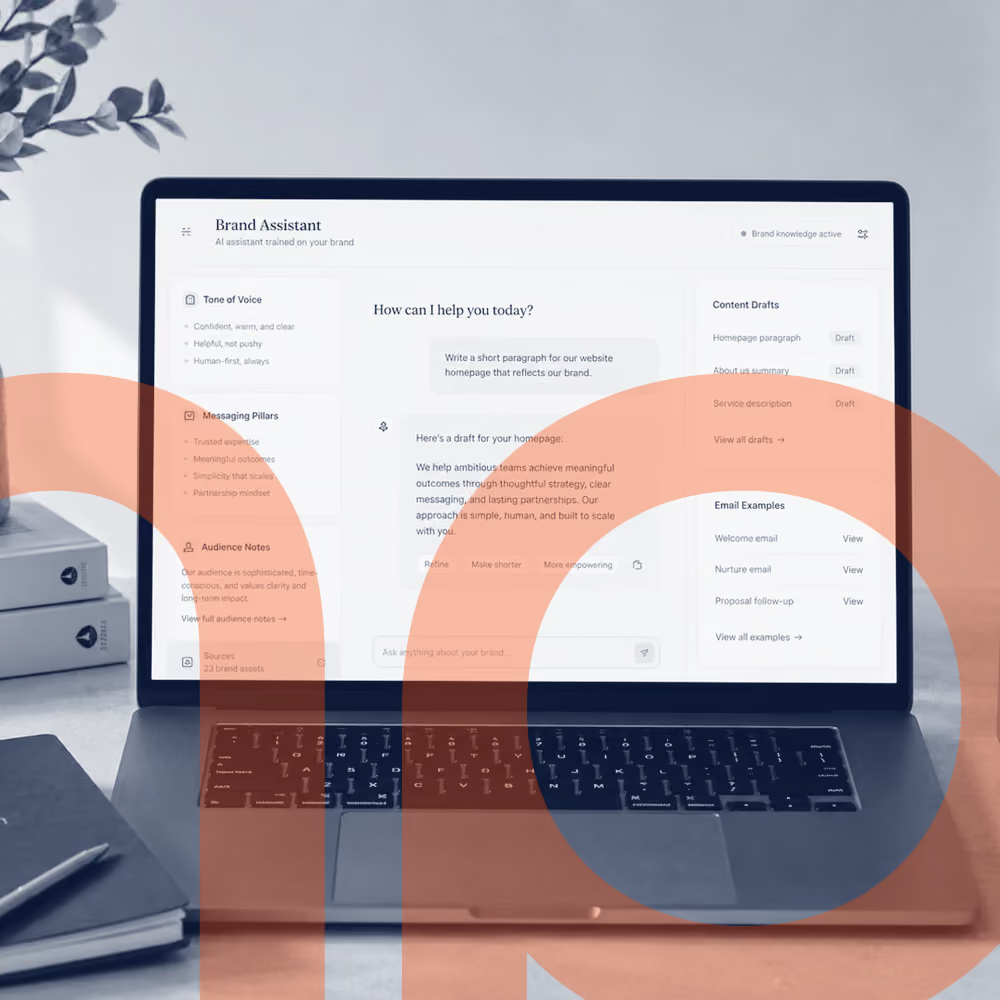
Turn your Brand DNA into a practical AI assistant.
I create Brand-Trained AI Assistants built from your voice, messaging, services, proof and business knowledge, so your team can create content, draft proposals, refine communication and access clearer thinking without starting from scratch.
The risk isn't using AI. It's sounding like everyone else who uses it.
Most business owners have now seen what AI can do. It can draft an email, write a post, suggest an article or turn a few notes into something that looks finished.
The problem is that “finished” is not the same as right. The wording can sound polished but not quite like you. The message can feel close, but not specific enough. The judgement can be missing.
A Brand-Trained AI Assistant gives the tool better source material to work from. It is built around your Brand DNA, voice, values, messaging, services, proof and examples, so the work it supports is less generic and more aligned with how your business actually thinks and communicates.
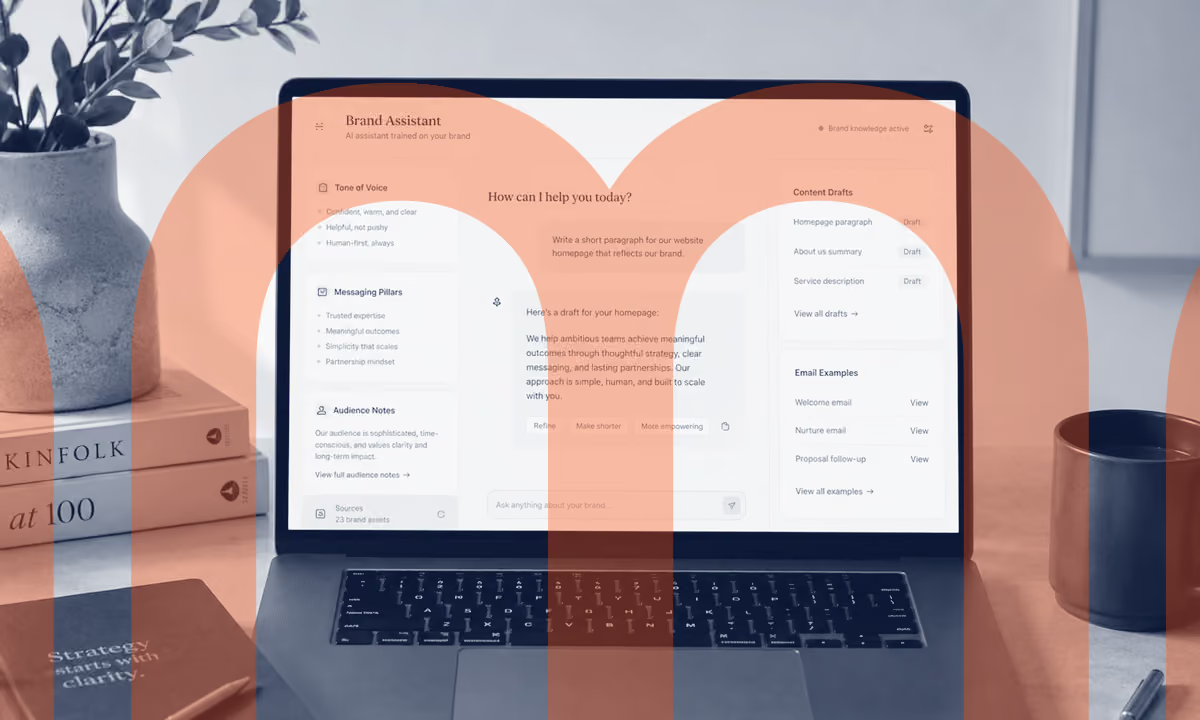
Give AI the context it needs to work from your business, not generic prompts.
A Brand-Trained AI Assistant uses your Brand DNA, voice, services, examples and business context to support more than content. It can help draft, refine, check and structure work in a way that stays closer to how your business actually thinks and communicates.
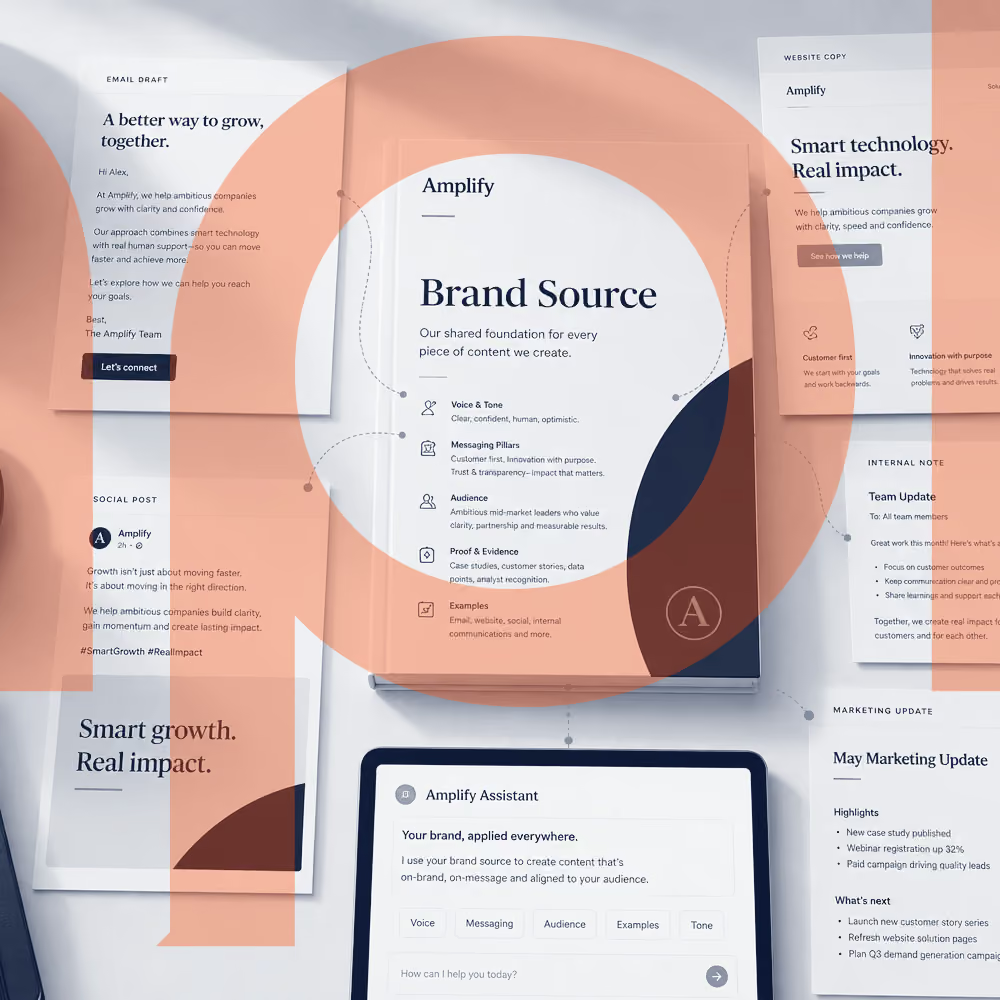
Your business knowledge in one usable place
Faster writing, with more confidence
A practical reference point for the team
The process starts with your brand, not the tool.
I don’t train AI in isolation or treat it as a separate technical add-on. Your Brand-Trained AI is built from the same foundations as your website, messaging and identity, so it has the context it needs to be accurate, useful and recognisably yours.
Here’s how the process works.
01
Start with the source material
We start with the Brand DNA, messaging and source material the assistant needs to work from. If those foundations are not clear enough yet, the first step may be Brand DNA or AI Strategy rather than building the assistant straight away.
02
Organise what the AI needs to know
Your positioning, services, tone, proof, FAQs, examples, process notes and decision rules are organised into a clear knowledge base.
03
Turn the knowledge into a working tool
The assistant is created around your business context, not generic prompts. It's trained to understand your voice, services, audience, proof and the way the business should communicate.
04
Check it against real tasks
We test the assistant against real tasks, such as content ideas, email drafts, proposal sections, website copy, summaries or internal notes, then refine the instructions and source material.
05
Make it useful in practice
You receive guidance on how to use the assistant properly, where it is useful and where human judgement still matters.
What your Brand-Trained AI can support.
The assistant is not there to replace judgement. It gives you a stronger starting point for the work your business already needs to do.
Brand-Trained AI can legitimately act as a strategic advisor, ideation partner, content creator, proposal assistant, messaging assistant, client communication assistant and internal knowledge assistant.
Questions about Brand-Trained AI usually come down to fit, accuracy and how it works in practice. These are the things people tend to ask once they understand the idea and want to know whether it makes sense for their business.
Is this just a quick AI setup?
How do I access my brand-trained AI?
How is this different from using ChatGPT on its own?
What can I use it for?
Will it actually sound like my business?
What do you need from me to build it?
Will it replace me or my team’s judgement?
A few words from clients whose brand, messaging or AI work started with the same process of capturing what makes their business distinct.
Ran Ankory
Founder
Scenario Architecture
Andrenna D’Souza
Founder
Studio Aurora
Alice Harvey
Director of Communications and Business Strategy, Scenario Architecture
Build from the thinking that makes your business valuable.
Brand-Trained AI helps you reuse your expertise across your business. Explore where it could save time, improve consistency and make your thinking more useful.


Web Design by Amplify Websites
© 2026 Amplify Websites Ltd - All Rights Reserved